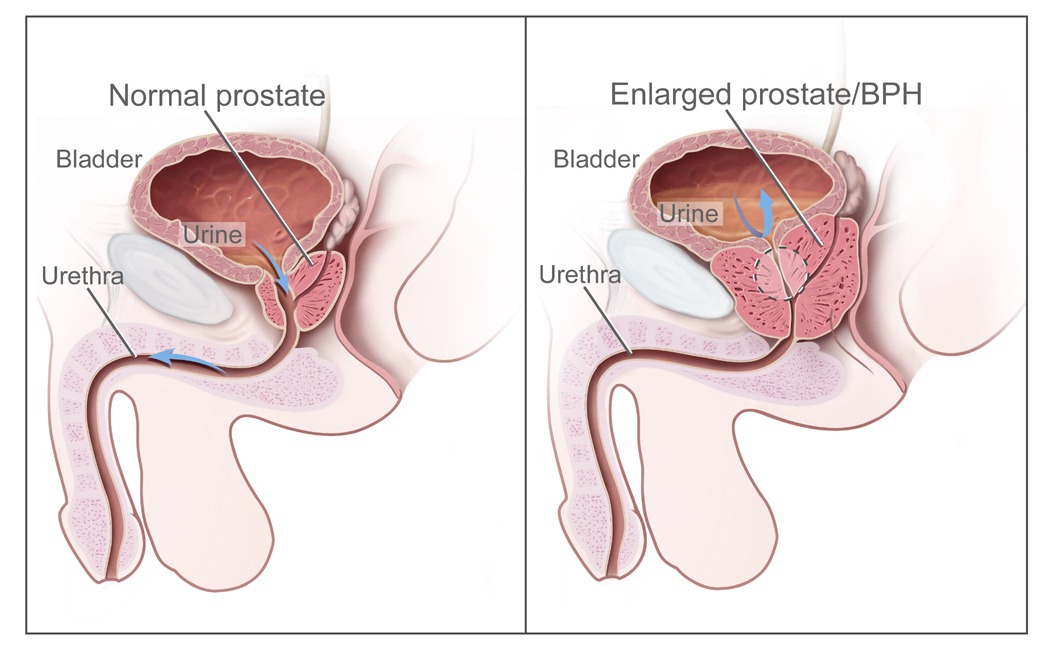
What is Benign Prostatic Hyperplasia and what are the symptoms of BPH? The prostate is a walnut-shaped gland present in front of the rectum and under the bladder. It comprises the urethra, which is the tube that carries semen and urine into the penis. Prostate glands cause mild to severe complications when they grow in size.
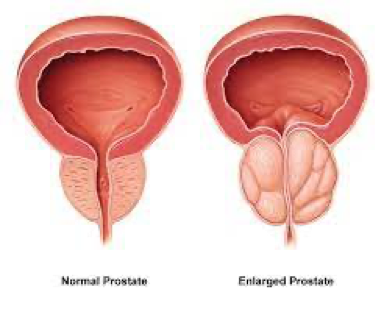
One of the main functions that the prostate glands perform is producing fluid that makes up the semen. This liquid is necessary to nourish and assist the transportation of sperm through the penis. When the prostate enlarges, there can be problems with the production of semen and possible complications when passing urine or ejaculating.
What Happens in BPH?
In Benign Prostatic Hyperplasia (BPH), the walnut shaped prostate enlarges and makes it difficult for the urethra to contract or expand when urinating or ejaculating. It is a non-cancerous prostate condition also called Benign Prostatic Enlargement (BPE).
What are the Symptoms of BPH?
As the muscular tissues and surrounding cells of the prostate grow and increase in size, you may experience multiple symptoms ranging from barely detectable to highly noticeable. One of the main things that you should keep in mind is that BPH can cause disruptions and block the tube (i.e., urethra).
These are the symptoms that a person might experience:
- Urgency to urinate
- Dribbling urinary system
- Slow urination
- Urination at night
- Trouble starting urination
- Pain during ejaculation or after urination
- Pain while sitting (enlarge prostate)
Severe symptoms might include:
- Bladder infections
- Bladder stones
- Blood in urine
- Kidney damage from the pressure due to large amounts of urine retained in the bladder
- Inability to urinate despite frequent urges
- Pain/Fever/Chills associated with frequent urination
- Lower abdomen pain
- Genital Pain when urinating
Treatment Options for BPH
For mild cases, simple remedial solutions can help regulate the condition and prevent progression. However, waiting for the condition to resolve on its own due to mild symptoms doesn’t necessarily mean that it will happen. In fact, mild symptoms can progress into a chronic problem. Hence, proper treatment options are vital to take care of such a condition and maintain the health of prostate glands.
Medications
Medication can help control the growth of the prostate glands by inhibiting the abnormal production of the hormones responsible for it. Moreover, medication can also control the relaxation of the prostate glands, which may help in reducing the pressure on the urethra. Hence, it is possible to alleviate the symptoms of BPH through medication and control the frequent urges to urinate or improper urination.
However, you should know that certain medications can cause retrograde ejaculation and other related symptoms, including lightheadedness, weakness, and tiredness.
Surgery
Your doctor might suggest surgical procedures to remove the excess prostate tissue causing the enlargement and pressure on the urethra. These surgeries aim to remove the excess tissues completely through different surgical approaches.
- Transurethral Incision of the Prostate (TUIP)
In this surgical procedure, the doctor will make two incisions towards the bladder neck and the prostate gland (enlarged). This is the area where the urethra and the bladder join. The procedure widens the urethra in order to assist urination.
- Transurethral Electro-vaporization
This technique involves the use of electrical energy to heat the excess tissue on the prostate. This heat will convert the excess tissue in the process into steam.
- Transurethral Resection of the Prostate (TURP)
Using special and fine instruments, your urologist will remove the excess tissue that blocks the urethra. The side effects might include infections, bleeding, or impotence (erectile dysfunction). However, it will free up the urethra from any physical tension and allow free urination.
The latest treatment options include the use of laser energy to target the tissue area that blocks the urethra.
Minimally Invasive Treatments
While medications and certain invasive surgical measures help treat BPH, there are more advancements in the medical procedures that can treat the problem effectively. Notably, minimally invasive medical procedures are cost-effective, carry minimal side effects, and allow speedy recovery.

Water therapy involves the insertion of a special instrument into the penis towards the prostate gland. Following that, the doctor inserts a fine needle into the instrument that reaches the prostate gland and emits steam vapors. The steam converts to water on the prostate, which causes a transfer of thermal energy. Hence, the heat kills the excess tissue, and the body absorbs the dead cells.
In this procedure, the doctor separates the lobes of the enlarged prostate(s) in order to ensure that the urethra remains wide. Thus, it is easier to urinate and control the function. Inserting an instrument into the penis and moving it forward, your doctor will transfer thin implants to the sides of the enlarged prostate. The pull from 2-6 transplants releases the tension on the urethra and makes it wider.
Symptoms of BPH: Conclusion
Do you require treatments for BPH conditions? Are there severe symptoms that require immediate medical attention? Well, you should get in touch with the experts at Fifth Avenue Urology. They can help you deal with the symptoms, decide on treatment plans, and ensure effective solutions to your urethral health conditions.
Ring us at 212-675-3186 for an appointment today. It is best to consult a urologist for your needs if you are facing even acute symptoms.
References
https://www.hopkinsmedicine.org/health/conditions-and-diseases/benign-prostatic-hyperplasia-bph
https://www.webmd.com/men/prostate-enlargement-bph/what-is-bph
https://www.healthline.com/health/enlarged-prostate
https://www.urologyhealth.org/urology-a-z/b/benign-prostatic-hyperplasia-(bph)



 Dr. Larish is a urologist and surgeon treating women and men with a variety of urological conditions. His expertise is in treating complex kidney stones, enlarged prostates (BPH), incontinence, erectile dysfunction, infertility, and urological oncology (prostate, bladder, kidney, and adrenal cancers). He is an expert in general urology and is often consulted for second opinions.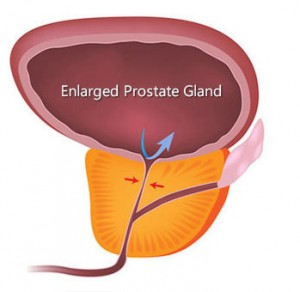
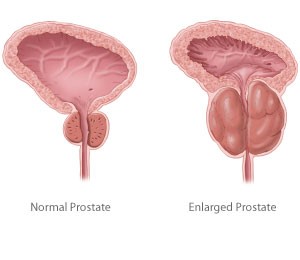 In some cases, this condition can cause the bladder to become blocked. This makes it very difficult or even impossible for men to urinate. When this happens, it creates a backup that can damage the kidneys, create bladder stones or lead to bladder infections. That’s why it is important for men to seek out treatment from their doctors should they believe that they have this condition.