Overactive bladder is a common condition that affects millions of people every year in the US and causes changes in their lifestyle. The changes in their lives can be devastating, depending on the severity of the condition. An overactive bladder or OAB causes the patient to feel sudden and frequent urges to urinate. The urge to urinate can come at night and several times at that. It can be quite disturbing and interrupt sleep, leading to insomnia, anxiety, and frustration.

(Source)
Like OAB, patients with urge incontinence feel sudden and frequent urges to urinate during the day and night. However, the main difference is that in urge incontinence health issues, patients leak urine more frequently than those affected by OAB. The overall impact on the lifestyle can be devastating as patients avoid social interactions and feel awkward discussing their reasons for frequent trips to the restroom.
Urge Incontinence and Overactive Bladder: Symptoms
In case you have urge incontinence and/or an overactive bladder health condition, you must know the early symptoms that are common in both. Identifying symptoms at an early stage can help you get the required treatments on time for fast recovery:
- Difficulty controlling the urge to urinate
- Frequent urges to urinate even when you haven’t had water or any other liquid for a few hours
- Waking up at night more than once due to an urge to urinate
- Unintentional urine loss, whether you have an urge to urinate or not
- Urinating more than eight times during a 24-hour period
Most of the time, patients with urge incontinence and overactive bladder end up leaking urine before reaching the restroom. The unexpected urge to urinate is among the most common symptoms for both types of health issues.
However, it can be difficult to go by a daily routine with such issues. Therefore, most people try to get the best treatments to help resolve the issues. Generally, oral medications work wonders and help patients deal with symptoms. But, when oral medications fail, patients have to discuss the possible treatment options to solve the urge incontinence and overactive bladder issues.
Fortunately, two treatment methods have been gaining quite some attention from the patients. Expert urologists suggest that sacral neuromodulation and bladder botox injections can help solve the bladder and pelvic muscle-weakening while also resolving several symptoms. Let’s take a detailed look at both treatment options below.
Sacral Neuromodulation (aka Sacral Nerve Stimulation)
Sacral Neuromodulation or Sacral Nerve Stimulation, aka SNN, is a therapy that’s aimed at solving different bowel and bladder health problems. It’s worth mentioning that SNN isn’t for all patients struggling with urge incontinence or overactive bladder conditions due to several health factors. Despite that, it’s one of the best life-changing treatment options for such affected people. Consult the right urologist to discuss your eligibility.
SNN therapy involves the use of electrical implants that augment the communication between the bowel/bladder and brain to ensure effective control over urination. It’s still in diagnostic trials, and expert urologists are still considering massive applications across the healthcare industry. However, several reputable urologists suggest that SNN can help improve various symptoms.
Is It Right for You?
SNN therapy is possible when lifestyle changes, oral medications, and other treatment methods fail to improve urge incontinence and overactive bladder. It’s a recommended procedure by expert urologists once conservative treatments don’t work. A specialist urologist will assess your eligibility and qualify you for the treatment procedure.
Bladder Botox Injections
Botox injections aren’t only for face wrinkles. They can help relax and control bladder muscles to help in relieving overactive bladder and urge incontinence symptoms. It’s also an important treatment method by expert urologists once conservative treatments yield little to no results.
Botox refers to a powerful protein that’s natural bacteria. It has natural paralyzing effects on muscles. Hence, it’s helpful in relaxing contracting bladder muscles that are causing urge incontinence and unintentional urine leakage/ loss.
What’s the Procedure?
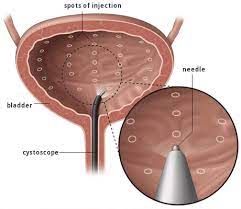
From severe neurological diseases to spastic bladders, Botox injections have a powerful drug that helps counter countless symptoms to improve overall health conditions. The Botox drug lasts inside the body for nearly 6-8 months before a re-injection is needed to keep the effects persistent. Surprisingly, there’re no clear limitations to using this treatment method for solving urge incontinence and overactive bladder issues.
A skilled urologist will use their surgical skills to insert the injection at the chosen site on the body (near the bladder). The entire procedure is quite complicated and hence, requires an experienced urologist for effective results and recovery.
Overactive Bladder & Urge Incontinence: Conclusion
Do you know that there are top urologists in NYC offering bladder botox injection therapies and sacral neuromodulation treatments? Well, at Fifth Avenue Urology. Dr. Yaniv Larish and Dr. Leonard Glickman offer well tried and practiced urological treatment services. Most urology patients refer these doctors to their friends and families with respective urological health issues. If you’re suffering from urge incontinence and/or an overactive bladder, both doctors can help you find the required treatment.
From botox injections to sacral neuromodulation, the doctors at Fifth Avenue Urology have immense experience in solving urge incontinence and overactive bladder symptoms. Give us a call at 212-675-3186 to set an appointment at our institute for urological health conditions and treatments.



 His areas of expertise include kidney stones, enlarged prostate (BPH), urinary incontinence, erectile dysfunction, male infertility, urological cancers, robotic and reconstructive urologic surgery, and the multidisciplinary treatment of complex endometriosis involving the urinary tract, bladder, ureters, bowel, and pelvic organs. He is frequently consulted for second opinions and challenging cases requiring specialized surgical expertise.
 Dr. Yaniv M. Larish is committed to providing compassionate, individualized care for every patient. Whether treating a common urological condition or managing a highly complex reconstructive case, he believes that every patient deserves the time, attention, and expertise necessary to develop the best treatment plan.
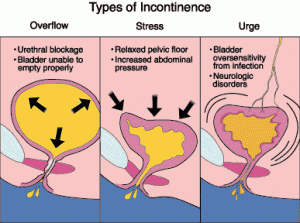 There are many factors that can contribute to this condition. Generally, it is a failure of the urinary system that relies on muscles and nerves working together to hold urine in the bladder until the appropriate time for it to be released. Nerve problems are the most common cause. This can be brought on by men who have suffered stroke, multiple sclerosis, or Parkinson’s disease. It can also be brought on by prostate problems including BPH or other conditions in which the prostate becomes enlarged.
 Urine is made as the blood is filtered through the kidneys. The urine then travels through thin tubes called the ureters, to the urinary bladder. The tube known as the urethra travels from the bladder, where it passes through the prostate gland and the penis to allow the release of urine outside of the body. Urinary incontinence refers to involuntary leakage of urine.
 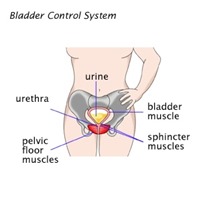 The urethra is surrounded by muscular tissue known as the urinary sphincter. The bladder fills with urine, and nerves in the bladder signal the sphincter to remain constricted, as the bladder stays relaxed. When your bladder is full, the nerves in the bladder are triggered to cause the muscles of the bladder to contract, and the urethra relaxes at the same time. Urine then flows from the bladder into the urethra, and you are able to void voluntarily because of the relaxation of the urethral sphincter. Urinary incontinence is the result of a problem somewhere in this pathway. An urologist is a specialist in problems like urinary incontinence, and if you suffer from involuntary leakage of urine, you should consult an expert urologist for an evaluation of your condition. If you are in the New York City area, Dr. Melman is one of the top urologists in the United States, and is available for consultation by appointment.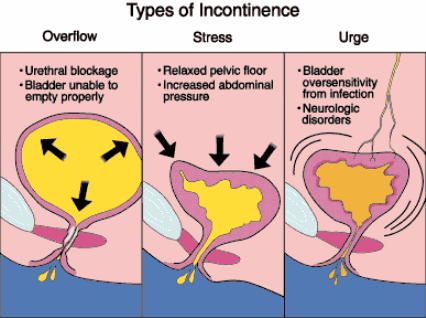
 If you suffer from urinary incontinence, you should consult Dr. Melman in New York City, and take advantage of his years of experience and knowledge, which have made him one of the top urologists in the United States.